Overview
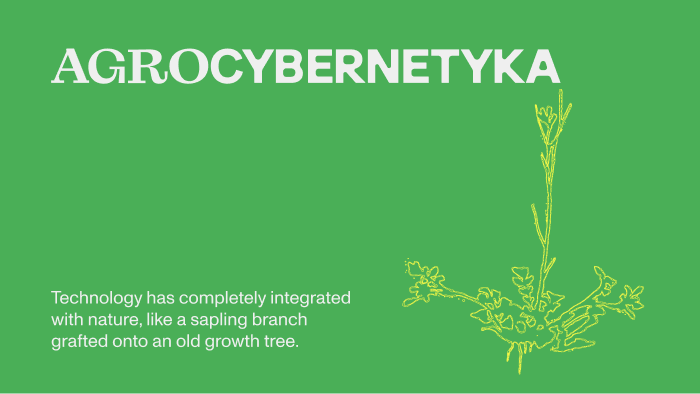
Agrocybernetics is an initiative that uses sustainable digital technologies to develop and innovate food production and consumption.
Our vision is to harmoniously integrate technology with nature. In doing so, we hope to change the current approach to agriculture, which we believe would benefit the planet and its inhabitants.
We value a systemic and multi-layered approach: starting with the establishment of home micro-gardens, through food system analyses and beyond.
source: 🔗 Agrocybernetyka
Project characteristics
Agrocybernetics (described above) might be considered as an emerging think-tank, with bringing together farmers and designers set as its fundamental goal.
Designing sustainable solutions and making them available and affordable is crucial part to ensure a bright future, thus Agrocybernetics does research on Human-Centered Design in the context of food production and designs solutions based on its findings.
Team
Agrocybernetics was established in January 2024 by five founders based in Poland and Spain. The current team consists of broad-spectrum designers, researchers, and a software developer.
My responsibilities as Agrocybernetics team member might be described as a mix of Community Management and Product Design roles. With Agrocybernetics in mind, I conduct research at AGH University of Cracow and base various social and educational events on it that highlight the necessity of doing research & providing innovation in the context of modern agriculture.
Project outcomes
To get to know the Agrocybernetics team, the community and their findings and projects join the Discord server where all the initiatives are discussed and developed. The four major successes developed by Agrocybernetics as of October 2024 are:
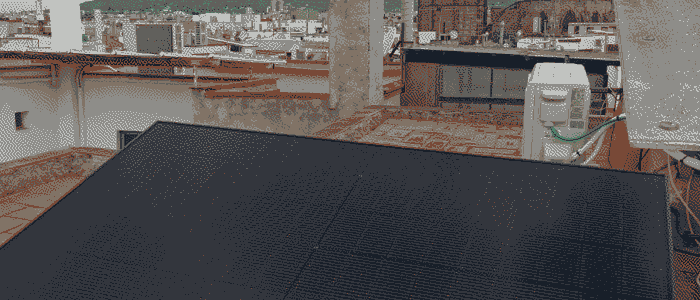
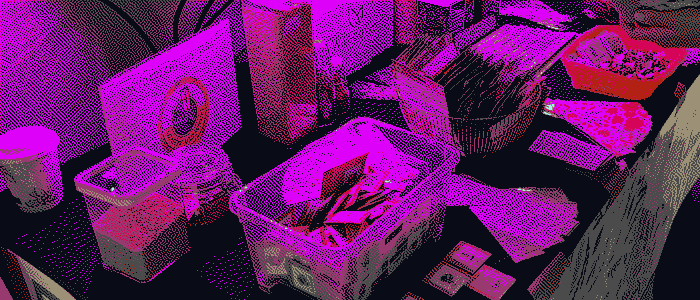
➜ Agrolab in Wesoła District in Cracow, Poland Tomatoes growing at Agrolab located in Cracow. Original photo by: KK. The image is dithered to reduce it’s carbon footprint. Flax flower raised in Podhale Region, Poland. The image is dithered to reduce it’s carbon footprint. A solar panel in Barcelona, Spain. Original photo by: CS. The image is dithered to reduce it’s carbon footprint. Plant Day 2024 giveables at AGH. The image is dithered to reduce it’s carbon footprint.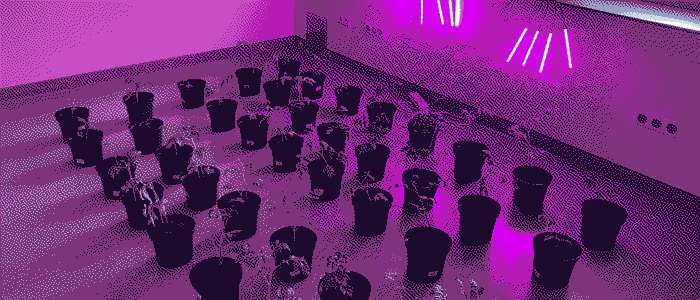

My process and contributions
Starting Autumn 2024 and continuing in 2024, I managed to:
- Create a scenography of a lecture on Agrocybernetics at Apteka Designu, Cracow,
- Set up a Discord server on which a community of peers share their gardening stories and exchange knowledge on the cross of nature & technology,
- Research currently operating startups and university spinoffs working on similar problems as Agrocybernetics,
- Plan and ensure funding to create a series of ten DIY creative worhshop events focusing on using plants as materials,
- Autumn Still life - painting for begginers
- Garden on a windowsill - microgreens for begginers
- How does winter smell? - Potpourri workshop
- Plants of the future - designing speculative plants that will save the humanity workshop
- Floral Explosions - making seed-balls workshop
- Clay potting for begginers
- Paining with flower petals - DIY workshop
- Seed paper from scratch - DIY workshop
- Research methods of creating truly eco-friendly and non-harmful gadgets to handout during events, that won’t pollute our planet,
- and many other low- and medium fidelity prototypes of subprojects and events.
While working on Agrocybernetics I make sure to include only Evidence-Based solutions and methods of creating Digital Products and Social Events. Every subproject and initiative of Agrocybernetics is preceded with a series of interviews with exsisting and potential stakeholders.
My design process is inspired by The Design Thinking Method with a personal twist of ongoing ethnographic on-site research focused on finding out whether the communities of potential users will be affected by my solutions. Making responsible choices and holding accountability is crucial when designing for such critical sectors as the food production sector.
Project goal
Agrocybernetics is intended to be a continuous initiative with years of work to come.
For further news and announcements please refer to agrocybernetyka.pl/en.